Game guide · ZZQHMY
Learn the rules of Rummy 500
A clear plan starts with the current position. Score for cards you meld or lay off, subtract cards left in hand, and reach a total of 500 points. Return to the explanation when a decision is unclear. Before making a move, check the cards in view. Each player starts with 13 cards from one 52-card deck. This version has no jokers. Return to the explanation when a decision is unclear.
One deck, two players, no jokers; open melds and layoffs; low-run Ace = 1, other Ace = 15. Going out need not end with a discard. No out-of-turn calls, deposits or prizes. Current hands save locally.
Try a more deliberate round
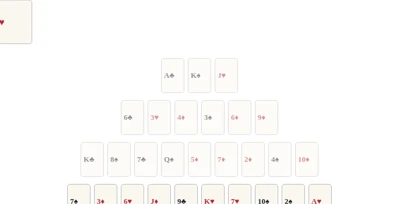
Take a moment to read the table. Draw from the stock or select a card in the discard history. Picking a buried discard takes that card and every card above it. Return to the explanation when a decision is unclear.
The challenge in front of you
Score for cards you meld or lay off, subtract cards left in hand, and reach a total of 500 points. Use another round to revisit a decision. For a calm first round, focus on one decision.
A walkthrough of the rules
- Each player starts with 13 cards from one 52-card deck. This version has no jokers.
- Draw from the stock or select a card in the discard history. Picking a buried discard takes that card and every card above it.
- A buried discard must immediately be used in a new meld or added to an existing meld. The game prevents ending the turn before this is done.
- Select three or more cards and choose Lay selected meld for a same-suit run or a three/four-card set.
- Select one hand card, then tap a table meld to lay off. You earn the value of your own cards even on an opponent’s meld.
- Discard to end a turn. Playing your last card in a meld/layoff can also end the hand. The stock running out ends the hand for scoring.
- Round points equal melded value minus remaining hand value. Aces count 15 except in an A–2–3 low run, where they count 1. Number cards count face value; faces count 10.
- Continue until a player reaches 500 with a higher score. A tie continues. No out-of-turn Rummy calls are used.
Getting comfortable with the controls
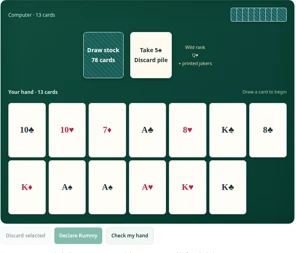
Tap a card to select it. Use the labelled pile and action buttons. Sort by rank or suit; the hand wraps onto additional rows on a phone. Open Discard history to choose a buried card. Use another round to revisit a decision. Keep the active rule in mind.
An example before you play
If you meld 52 points and retain 17 points, your round score is +35. If a buried 7♥ is taken, it must be used immediately, for example with 5♥ and 6♥. Return to the explanation when a decision is unclear.
One detail worth checking
A clear plan starts with the current position. Cards above a buried discard also enter your hand. Picking up a large pile can cost points if you cannot play those extra cards. Check the relevant controls before continuing.
Common questions
What is the aim?
Score for cards you meld or lay off, subtract cards left in hand, and reach a total of 500 points. Before making a move, check the cards in view. Take the next action only when the current step is clear.
How do I use the controls?
Tap a card to select it. Use the labelled pile and action buttons. Sort by rank or suit; the hand wraps onto additional rows on a phone. Open Discard history to choose a buried card. Take a moment to read the table. Check the relevant controls before continuing.
Which format is available?
One deck, two players, no jokers; open melds and layoffs; low-run Ace = 1, other Ace = 15. Going out need not end with a discard. No out-of-turn calls, deposits or prizes. Current hands save locally. For a calm first round, focus on one decision. Return to the explanation when a decision is unclear.
What should I check before a move?
Cards above a buried discard also enter your hand. Picking up a large pile can cost points if you cannot play those extra cards. Treat this as a chance to practise one rule. Use another round to revisit a decision.
Can you give an example?
If you meld 52 points and retain 17 points, your round score is +35. If a buried 7♥ is taken, it must be used immediately, for example with 5♥ and 6♥. Look at the complete hand before deciding. Check the relevant controls before continuing.
Can I take a buried discard?
Yes, if that selected card is immediately usable in a meld or layoff. You must take every card above it too. Treat this as a chance to practise one rule. Use another round to revisit a decision.
Who scores a card added to another player’s meld?
The player who laid that card earns its value. Card ownership is tracked separately from the table meld. Begin with the objective. Check the relevant controls before continuing.
Can scores become negative?
Yes. If remaining hand value exceeds your meld points, the difference is subtracted from your match total. Work at your own pace. Take the next action only when the current step is clear.
Must I discard to go out?
Not in this version. Melding or laying off the final card also ends the hand. A clear plan starts with the current position. Return to the explanation when a decision is unclear.
What happens when the stock ends?
The hand is scored using melded cards minus remaining cards for both players. Use the rule sheet as a reference. Take the next action only when the current step is clear.